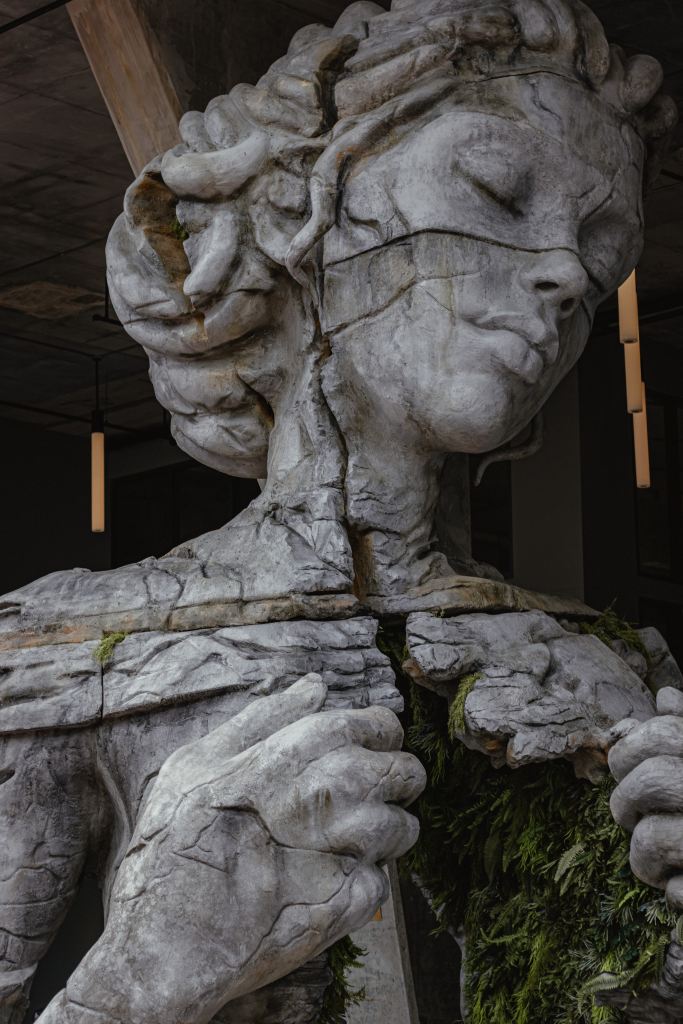
Estonia, 1870.
Endrick was bent over his desk, watching a stray drop of ink sink into the fibrous paper when he heard his wife’s soft hand on his door and sat up. His heart wanted to run away with her, or at least see what she was cooking, but he covered the empty page with his arm as if she would scare it away.
Lenna muttered “excuse me,” and set a bowl of blood sausage on the edge of his desk. He nodded in thanks and pressed his hand to the side of his head, as if he were trying to hold a thought in.
When the door clinked behind her he stared at the steaming bowl. He told himself he could have a slice once he finished the next page. That, and another thought, pushed him onward. One day’s carriage ride to the east of here, the one they called “Lydia of the Dawn” was undoubtedly stacking finished page upon finished page, and that feeling ate at him from inside. Made him almost sick to his stomach. He stuffed a slice of blood pudding into his mouth and felt better. When he opened his eyes he saw a smudge from the sausage grease next to the ink drop. It occurred to him that his sloppiness had accomplished more today than his imagination, and this truth felt to him like a weight in the steel nib of his pen.
An idea came to him, like a butterfly through the window, but he paused over the page while it looked for a place to land. Estonian was the language he thought in, but Russian was the language of plays these days. In fact, Lydia of the Dawn was writing plays exclusively in common Estonian, but Endrick suspected or secretly hoped that her meteoric rise would end soon, dramatically. Possibly inside a jail cell of some sort. He frowned at a second, newer ink spot, close enough to the first one on that blank page that it was clear he was having trouble starting. Another slice of blood pudding would surely jar the butterfly loose from where it was stuck in his mind. He closed his eyes and chewed. Before he opened them he decided he would write in Estonian, too, and the flapping wings of an idea unfurled the rest of the play in his mind while his hand caught up.
Endrick stuffed another slice of sausage into his mouth and the small room filled with the sounds of scratching and chewing. When a few sheets were laid on his desk, Lenna returned and put her hand on his shoulder. The muscles under his shirt relaxed but he did not look up. She took the bowl back and closed the door behind her.
The shadow of the glass inkpot leaned across the wood and his feet began tingling. Endrick pushed back from his desk and scraped his chair across the floor. When he pulled the first page from the bottom of the pile he smiled at the foreignness of it and strained his eyes at the words that already seemed from another time. Early Endrick. The room was getting darker, so he held up the paper to re-read the scene he’d just written.
Grease streaks, invisible against the desk, rendered the paper transparent when he held up to the light. Endrick picked up one sheet and then another, all of them criss-crossed with stains from the blood pudding letting light through the page.
ACT 1.
Scene 1.
[From a tree branch, SPIDER and AIR MAIDEN are watching
BLACKSMITH and his new creation: a perfect, golden woman.]
SPIDER: I’m telling you, the blacksmith does not care what’s upstairs. He’s a blacksmith.
AIR MAIDEN: Of course he does. He loves her!
SPIDER: That may be true….
[BLACKSMITH is struggling to get the immobile, heavy golden woman out of his house]
… but if he’s made the perfect woman out of gold, what’s she need a brain for?
AIR MAIDEN: Fuck you!
SPIDER: No, I’m serious. Or a soul? Legend says he made her “perfect,” so she’s perfect, as-is.
Look at him dragging her into his garden like that — he doesn’t care. He doesn’t want to change her. That’s love, baby! Watch. Watch! Anyway, what should we bet, and how will I spend it?
AIR MAIDEN: I’ll bet you a liter of vodka, because he’s going to figure out, as I am, how
painfully boring the brainless are. If he wanted to make the perfect woman she’s gotta be more than simply pretty.
SPIDER: Mmmm… I love vodka.
AIR MAIDEN: Quiet!
SPIDER: I’ll share a toast with you.
AIR MAIDEN: He’s trying to prop her in a chair!
SPIDER: Damn. He’s going to hurt his back.
AIR MAIDEN: Look at him looking at her! The way the sun loves her gold parts…
SPIDER: He’s setting up the table. He’s gonna feed her.
AIR MAIDEN: That’s a chess board, you idiot!
[SPIDER and AIR MAIDEN watch the blacksmith set up both sides of
the chess board while the golden woman sits frozen in place.]
BLACKSMITH: White goes first!
GOLD WOMAN:
[BLACKSMITH moves her pawn]
BLACKSMITH: Hmmm… I see what you’re doing.
[BLACKSMITH moves his own pawn to attack her.]
AIR MAIDEN: [aside, to SPIDER] Don’t look at me. I can feel your look.
[BLACKSMITH makes a foolish move with GOLD WOMAN’S pawn]
GOLDSMITH: Well, that was silly! [captures pawn]
AIR MAIDEN [loudly, to BLACKSMITH, who cannot hear her]: Hey hammer-head! What’s wrong with you?
SPIDER: Our man likes to win. Speaking of… where’s my vodka?
Lenna sighed. There was so much Endrick didn’t understand. How could such a good observer of human nature be so innocent, so totally oblivious to the ripples that would most certainly splash outward from this rock of a play, or how those ripples would certainly turn into waves that would crash against this very house’s front door. The man of the house was honestly unaware that there were three generations of genuine wiccan priestesses — witches, Endrick! — living under his roof, private, powerful women who would rather not have one of the government’s agents come a-knocking. She was sure grandmother Nana remembered Russian witch-hunts, and the bare minimum of wiccan touches around their house had been reduced to a balance between discretion and necessity. It was an inside joke between the women that Endrick thought all of it — the birch dolls over the door, the ground mouse teeth under the hearth, the bones and nests and wild things gracing deliberate nooks and shrines across the entire home — were merely evidence of the grandmother’s eccentricity, and slow slide into early dementia.
Lenna’s face was impossible to read at this angle. Endrick realized he probably looked like a worried chipmunk himself, holding his hands like this. He stuffed them in his armpits.
When she looked up he felt compelled to explain. “It’s an allegory—”
“It’s in fucking Estonian!”
Endrick couldn’t recall hearing anything that loud in his study before. Her voice pinged off the slate floor, like a blacksmith’s hammer. It seemed to leave a vacuum into which his voice leaked out: “Nothing says we have to write in Russian.”
She wanted to grab him by the collar and be mad at him, but Lenna decided Endrick looked like a little boy just then, eyebrows arched, hoping for a present his parents could not afford. No playhouse around here would ever gamble on a production that could get closed by the Russians. She did think the first scene had promise, truly. She had always loved fairy tales, especially the old and inappropriate ones Nana told her as a girl, and this opening scene contained… she looked back over the pages … no fewer than four references to old Estonian folklore, two thinly-veiled insults of the Russians, and something vaguely inappropriate with a gold doll. In Estonian. Whatever was going to happen in the rest of the play, if it started like this, there would eventually be a knock on the door.
He was dying for her to say something.
“Endrick…”
“Yes?”
She gently pried his arms from his sides, and they giggled at the black starbursts left there by his ink-stained hands. She got her hands dirty holding his, and wondered how much to tell this smudged, vulnerable man. He did not understand even the basic mechanisms of her womanhood, the timing of her monthly cycles, or what she did to avoid conceiving. What would he think of the taboo of witchcraft in his house? Her mind went backwards through their blood, from their daughter in the other room, to herself, to her mother, standing next to her daughter at the stove, rendering. Strong, invisible lines, like spiderwebs, connected their lineage to a giant indescribable thing, like an underground lake, and the women of her family — and a few others — had always taught each other how to dip into it. From mother to daughter the first people of this valley were connected all the way to her own beating heart, through a religion so old that the prayers were dubbed “spells” by the occasional rampaging Christian.
It was unlikely that some government officer, knocking on their door about the matter of her husband’s inappropriate play, would ever surmise that he was in the sanctum of three witches. There a way, she knew, to point a man’s eyes where you wanted him to see. Even easier when that man’s eye writes off the runes, cards, bones, herbs, talismans, feathers, mobiles, nests and dolls as woman-stuff.
The thought of someone else’s energy in their home made her want to spit in the ashes.
“I think it’s marvelous,” she gave his hand a squeeze that thawed his whole body. “But can I… Would you like to hear an idea?”
A log lived and died in the fire while Endrick thought about what she’d said. He looked down to find he’d drawn long looping designs on precious paper instead of writing. Lenna entered the room silently, dropped off a plate of cheese and a kiss on his head, and retreated to the kitchen, where Adeele and Nana were tending to something on the stove.
“Finally,” Endrick thought when the door clicked shut, and felt the familiar feeling of an idea coalescing over his head. Supposing Lenna was right, he needed to write this damn play in Russian. Or translate what he already had into Russian, and then keep going. His chair creaked when he leaned back, his half-shut eyes turning the rafters into clouds that he could peer into and pull an idea from.
“You’re not my friend,” he said to the ceiling and then held onto the thought. False friends. Like words between languages that seemed the same, but weren’t. The Estonian word for “forget,” was the same as the Russian for “keep in mind.” He leaned forward, started pulling the cap on and off his pen. There was a pronoun like that, too. He began writing the title page for this scene. Connections sparked. The Russian word for “this” worked for everything and everyone, but in Estonian there was a “this” for things, a “this” for strangers, and a familiar, gender-free “this” that one had to earn through family or connection.
Smells leaked under the door from the women’s work in the kitchen, and while the room filled with the sound of his pen scratching, this cheese plate steadily diminished.
The Germans were going door to door in the valley, and the “grandchildren” flinched with each crack of gunfire. Adeele put her finger to her wrinkled lips and winked. She slid a clay bowl of nuts across the wood table, and then the room returned to the soft hiss of wood in the stove.
None of them ate.
She moved slowly to the shelf and came back holding a folded piece of paper. The six small heads leaned in and saw a kind of dark powder inside. She motioned for each of them to spit into it, which they did, although the youngest had to wipe her meager drop off her chin with the rough paper.
Adeele carefully folded the paper closed, opened the stove with a whoosh, and threw the paper inside.
“Did you ever hear about your Great Grandfather Enrick?” the question formed from the moving of her wrinkly cheeks as much as her vocal cords.
“The criminal?” whispered the eldest child.
Adeele smiled. “Before the Russians arrested him, my sweet father was a playwright.” She glanced over at the door. In a voice barely louder than hiss of burning wood she tried to keep them calm with the story about his play, “The Blacksmith.” The littlest one adjusted herself on the worn wooden chair and was quiet for three seconds, until the end of the “Once upon a time,” part.
“Nana-deele, was I there?” she interrupted.
Before the girl’s siblings and cousins could correct her, Adeele said that, yes, in fact, she was there. Her eyes twinkled in the candlelight when she whispered that they had all always been here, would always be here, and silenced any further questions by switching to Estonian. The flickering walls of her home and the path outside and the cadre marching towards them in the darkness… Adeele felt these things pull away like their ponytails used to do when she and her mother clasped hands and spun around. It had been a few moments since the last gunshot; how much of this story she would get to tell? While young eyes unfocused on the center of the clay bowl, the language of lullabies and grandparents drew them seventy years in the past, to a crowded square was not far from here, where a butterfly floated just over the crowd…
Its yellow wings yank, yank, yank it upward. The creature has been drifting like a slip of paper all the way from Africa, and now it yank- yanks towards the stage, over hats and hair and smoke and conversation that all suddenly stops. A blacksmith emerges on the stage with his leather apron and hammer. He sees a golden woman sleeping in a chair, with her head on a table. From inside his apron his withdraws a tuning fork, and with a single note struck from it with his hammer, he wakes her up. The audience chuckles at how she blinks, and she notices the crowd, which makes us chuckle again. She stands up and blinks at us; she’s a golden-haired actress from the next town that some of us might recognize, but she’s covered now — entirely — in gold paint. The poor blacksmith wants to talk with her but finds out that she cannot speak until he unlocks her voice with the right song. He digs inside a trunk and pulls out a guitar, which he plays very badly. Then he pulls out a flute, a violin, a drum… but he is a poor musician. The audience laughs, but we can feel the tension, how a bad note sits inside us like a sickness. And we want them to fall in love. He gets an idea, and goes over to his anvil. He starts pounding out a rhythm with his hammer. Bam, bam! It’s primitive and jarring, but the golden woman starts to move, to dance, and we find ourselves clapping, clapping, and swaying in our seats.
Above Adeele’s head a cherry pit defies gravity, has been defying gravity for the decades that have passed since one of her brothers spit it up there. She realizes that she will probably miss its fall.
Next to you a woman is drawn upward suddenly as if by a rope. Her arms begin to take flight, like butterfly wings, and when she stomps her feet the sound of small bells makes the children smile. When you get over your surprise you notice she’s a very good dancer. Two rows ahead another woman stands up, and then another. Each of them pulls another instrument out of hiding, another sound they add on top of the hammerbeats from the anvil. We realize that much of the audience is really performer, and as we clap and sing along with them, performance becomes audience, and all of us are part of all of it — trees, boulders, rocks. The sound builds, like the inside of a beehive, until the golden woman steps off the stage. She weaves through the crowd with her hand outstretched, and touches each one of us on the shoulder. When she touches you, you sit, and become quiet as a statue. The music slowly fades until the song becomes humming which becomes overtaken by the hammerbeats…
Adeele does not know when her telling of this story will end, but she knows she will leave out its true epilogue, from days later, when the men of the town chastised and beat their wives and sisters and daughters for participating in “that Estonian play” without permission.
Every one of us is sitting again, even the women who were secretly actresses. With each strike of the anvil the golden woman turns in place, in tiny increments, like the gears of a watch. Tick, tick, tick.
Only Adeele looks up when knocks pound the door. The word for anvil is different, but “rhythm” is a friend, the same word in Estonian and Russian.
The hammering becomes stronger. It’s rhythmic and loud. The blacksmith is hammering for all he’s worth; because he can’t make music, he pours all of himself into hammering the anvil. He’s focused. He knows the sound he’s making connects them and he’s afraid to lose her. And maybe it’s planned or maybe it’s an accident but at that exact moment, on that stage, the same yellow butterfly re-appears. It circles about the golden woman’s head, and as he beats on and on he seems to be conducting the yellow wings, higher and higher, swirling above her head like, like an idea. Just out of reach. Hello, there.
 Dave Gentry