According to my wife, Isabel, Daddies do the mean, hard things.
This has been inscrutable law since she first pronounced it, a trimester ago, her way of getting me to step up my game before the baby arrived. She brandishes this law liberally, like a laser pointer, towards everything from clogged drains, to dog poop to trespassing bugs and beyond.
On this Monday, it means, “Get the water hooked up in Rancho.”
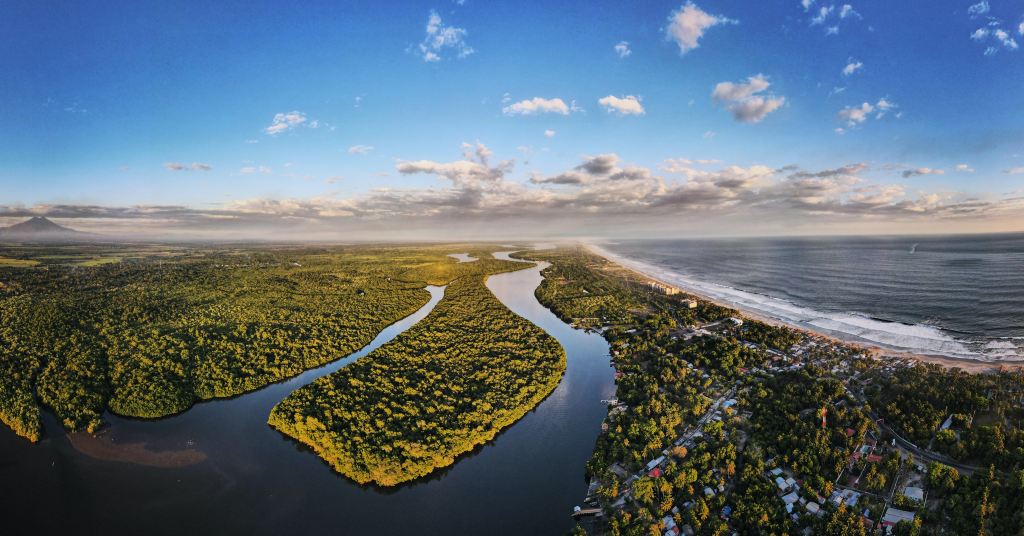
We have a well at our beach house, “Rancho Relaxo,” but the water is suspect. It should have been tested to see how many parts per million might have been contaminated— with battery acid or lead or whatever it is that some agency would prevent people from throwing into the water, if such an agency existed here in El Salvador. Like the hem of bell-bottoms dragging across a bathroom floor, this patch of land weathers a watershed’s worth of runoff before it spills into the ocean at Sunzal Point. It’s questionable at best.
When I questioned the gardener, Vicente, about the parts per million of heavy elements in it, he picked up the hose, took a sip, spit it out, and said, “Agua dulce.” Fresh water.
Plomo, or lead, was the very different word that popped up when I dug deeper. Our mentor and housekeeper looked me square in the eye and said I absolutely could not bathe our impending son in the well water. She knew these kinds of things, so she knew this. Hard no.
Damn.
I walked across the dirt path to seek guidance from my neighbor, Karim, who gave me a number.
“He’s called ‘Mincho.’ Short for Benjamin.” Then he added, “Let me know how it goes.”
On the afternoon of my appointment with Mincho, on the forty-five minute trip from San Salvador to the beach, the sun persisted through John’s brown beer glass like a sepia photograph. While he gestured with it in the passenger seat and his silver hair whipped around, he raised his voice to wonder aloud where, on a scale from “a little red tape” to “total shakedown”, this particular water hookup was going to fall.
Somewhere out there Mincho is waiting for us. I said he sounded nice on the phone.
John snorted. “In Mexico, this was like THE biggest setup.” John had a Mexico story for every occasion. “I mean, the guy who gave you water was a guy you did not want to fuck with. You piss him off, or don’t pay up? You’re hosed!” Scraggly fields turned lush the closer we got to the beach. Whenever I thought about John’s trip here on a Harley, from California, in the Seventies, I felt like a pampered little wimp. Although he was almost seventy, he was the friend I’d pick to have my back in a fight. He took a swig and went on, “I mean, that could make or break your whole thing down there.”
As we drove towards my thing down there, I wondered what exactly it was. A little surf house? My life savings? A pet project? A future home for my wife and family? An investment? A bad idea?
I repeated that Mincho seemed legitimate, on the phone. I went on to paint a clear picture of what I expected this to entail: a trip to the alcalde’s offices in the county seat of Tamanique, a collection of cinderblock buildings a few kilometers up the mountain, where official business stuff got signed.
John grunted and looked out the window.
The bougainvillea canopy squealed against the roof of the Ford Escape as we pulled into the worn tire tracks at my Rancho,. As I let a burst of AC out of the car, two faces that hadn’t known AC today smiled at me from the back yard: my builder, Vicente, and his helper, Hugo. It was Wednesday, so they were packed up and waiting for me to pay them.
I was in a hurry to find Mincho, sign the paper and go surfing – it was supposed to be really big today.
But they wanted to show me what they had done before I paid them. Two years of scrap wood had been made into shelves and a smaller pile of scrap wood; curtain rods were hung at such an exact height that the drapes just kissed the floor; an avocado plant had taken root between the lime trees; the water pump no longer heaved and wheezed like it was trying to inseminate the upstairs toilet.
So where was Mincho? He was supposed to either meet me here or at his office. They had no idea. A phone call later, and I found out he was at his house and could I just swing by. A bratty part of me ticked off the number of waves out there that would go unridden while I sought the man.
I looked to Vicente and Hugo for help. Hugo knew where it was. “Not far. Less than a few kilometers.”
Great!
“We will ride with you.”
Couldn’t they just tell me where it was?
They exchanged a look and said this was better.
John said he would hold down the fort here at Rancho, so I told him about the good beers hiding in the vegetable crisper.
As our trio backed out of Rancho, the bougainvillea squealed against the roof like it wanted us to stay, and John waved. Vicente hopped out to open the gate and latch it closed behind us.
We crossed the main road, swerved onto the next dirt road, and disappeared up the hills. We bounced along in Isabel’s Escape, windows down, elbows hanging out, bougainvillea flowers cascading off the roof like jaunty evidence or a trail of breadcrumbs. When it got too dusty, we rolled the windows up. We passed school kids in uniforms; we passed regulars in stores. We left a thin coating of road dust on everything we passed. We pulled up to a cement bunker to ask directions.
Hugo called the bunker a church, squinted, and recognized a worshipper. He asked her which way to the pasarela, the footbridge. They looked at him funny. He asked for Mincho’s house instead, and they were like, “Oh, the pasarela.” We pushed on with a little clue.
With my elbow out the window we wound further from my comfort zone, and I reflected on the illusion of such a thing Security. As a young boy, sandbox age, I knew that I needed weapons. For defense, I suppose. From what, who knows. But my instincts told me that self-preservation depended upon lining small clumps of sand on the edge of the sandbox. In the event of an attack, any assailant would have some pretty serious thinking to do while getting pelted with those sand cakes. This is what I thought about while we passed a boy herding a cow up the road, twirling a machete and trying to see us through the tinted windows.
The slight bouncing became full-on jostling. The inside of the car was quiet. The sight of a ceiba tree meant we could talk now about the national tree for a minute, then wait another minute before asking how far it was to the pasarela. Why the hell was there a pasarela up here anyway? Those things spanned across roads or major highways to keep people from getting splattered in their mad dashes across the road. We were literally the only car here, rush hour traffic, and heading deeper and deeper up the hillside.
We rounded another bend and there I saw it: the pasarela. Impressive engineering and a few tons of steel had made this part of the river passable. In a country where they steal manhole covers to sell for scrap metal, this was like an ATM spanning the river.
Now I got it. The pasarela was crossing a natural boundary, the car was staying on this side, and I was going across. I felt like I was the last to get a Spanish joke. I tried calling Mincho on the phone again. No signal. I asked Vicente, but he had no minutes on his phone. Hugo’s worked. As it rang, I saw a man wave at me from the other side of the river.
Hugo pointed: “Mincho!” I handed the phone back. My former companions planted themselves against the side of the ride and crossed their arms. Vaya con Dios.
A short scramble on an outcrop, a few steps up, and I was on the platform with only one way to go. The river churned underneath. It wasn’t an Indiana Jones-style swinging bridge, but it wasn’t far from it. And there was a Nazi of a dog planted square in the middle of it. At one point in its family tree a Border Collie or German Shepherd had made a cameo, but the heat and garbage diet had sapped any pedigree right out of it. I could see its curled-up dingo tail and dreadlocks waving towards the ground like droopy nipples. I couldn’t see its chicken-bone proof colon, but I knew it was there. While it stared through me, I walked towards it, faking confidence like a pocketful of sand-clumps. The closer I got, the more its features coalesced into the sad cartoon of a guard dog. Like an old veteran in a nursing home, its body locked into place while it hunted memories and I slipped right past.
When I jumped off the steps on the other side I looked back. He was still facing away from me, in the same spot.
I turned towards the jungle on the other side and saw Mincho there, waiting for me.
He was waving for me to come inside his gate. As soon as he saw me start walking down his street he receded into his yard. His street was really just a goat-track through his neighbors’ houses, which were really just flimsier versions of Mincho’s sheet metal and cement block lean-to. Personal effects — a pinwheel, a cement block, a broken kite — led towards someone’s place.
Three men planted in chairs looked up at me and returned to watching the river go by in the slackening heat of the day.
A small, chicken-wire fence wrapped waist-high around Mincho’s dirt yard. As I passed through the gate, he emerged from his house. He didn’t seem to walk, but sort of grew towards me until he swallowed my hand in his.
The first thing I noticed about his face was —
“Who’d you come here with?” he rasped in country Spanish.
My answer was a pale arm pointing back across the river at my crew, poking sticks in the mud and protecting my car. He nodded, then took in my Cape Cod T-shirt and board shorts. “What do you need?”
I thought I just needed to sign some papers. You know, for the water?
“Sit down.”
He motioned for me to go around the table and have a seat. Oh, no. Gang tattoos. On the back of his neck. Everywhere. Both forearms, most knuckles.
I sat. Sand clumps of confidence farted dust in my pocket.
He drew his breath in and began. “Who told you about this water hookup? Karim? Karim’s a good man. From his connection, I hooked up your neighbor, Tyler, and the engineer— what’s his name? Anyway, I did not let Julio connect. I do not like that guy. Water comes Tuesday, Wednesday, Sunday. When we sign this paper, the date you put on there is the date that you have to be in Tamanique before four o’clock. What day can you do that?”
His eyebrow arched and I realized he had asked me a question. I had actually been studying him and only half-listening. He had a newly-cut fade framing a full face shiny with tiny beads of sweat. My own glands were expressing an overall greasing of my own face, but he looked like he’d been through a mister. The effect was flattering. I was six inches taller, but he was two of me, and I imagined he could make an All-American football player in another life. His face would have filled up the whole helmet, and the facemask would have pressed his cheekbones. As I relaxed in the minor consolation that at least he didn’t have any gang tattoos on his face I noticed the ones on his earlobes, and then his neck. That neck could have pulled the cables tight on the bridge I’d just crossed, and that forehead could have hammered the bolts down.
His voice never raised above a whisper.
His eyebrow did raise to see what day I could do that.
You mean get to Tamanique before…?
“Before four. I need to you to put the date on the paper. Honey, where’s the paper?”
Of course, he was married. I had seen his small son running around under the table, but hadn’t let it register. I was still surprised by presence of a woman. She marched around the table and put the paper in front of her husband, on top of a child’s notebook. He didn’t look up. I did. She was pretty. Nice work, Mincho.
As soon as I thought it, I wished I hadn’t.
Cardinal sin. Another man’s garden. I whipped my eyes back to the paper, happy to see him still looking down at it. When he handed it over to me to sign, I tried to keep my sweaty hand from resting on the document. By the time I was done with it, the paper had turned to soggy tissue.
Mincho beheld it. In another world, the bureaucrat that does this job would have pinched it like a diaper, peered at it through bifocals and nodded at the parts filled in correctly, frowned at my sweat drops. Instead he seemed to take it all in holistically, eyes unmoving and settled on the geographic center of the paper, reading the forest, skipping the trees.
When he looked up, he looked past me, and a sneaky grin made me tighten. With a lift of his chin he motioned me to look behind me. His son came out with two huge wedges of watermelon.
Vicente and Hugo noticed the watermelon juice-spattered contract since I was waving it over my head like a college acceptance letter. I thanked them again for bringing me out here because, shucks, I for-sure would have gotten lost if I’d come out here by myself.
They exchanged a look.
“Uh, you could not have come out here on your own, Dave.”
“No?”
Hugo made an expansive gesture. “This whole valley’s controlled by gangs.” A minute later, Vicente, who couldn’t read and really didn’t mind the fact, might as well have been cruising Vegas in a limo. Hugo was nodding on beat. I turned up the AC a notch, along with the music. By the time we got to the church, we had run almost the whole gauntlet of Salvadoran transit experiences. We had hollered and gotten hollered at, nearly hit a drunk, gave a ride to the drunk’s buddy, discovered the drunk’s buddy was Hugo’s cousin, and shared some fruit that he gave us from a sack.
 Dave Gentry